



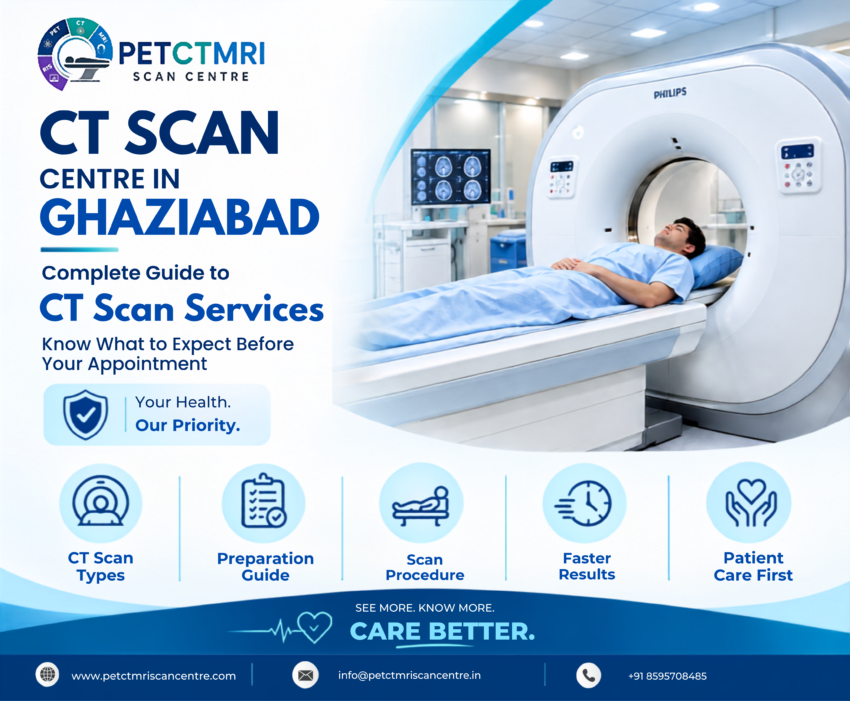
Need a CT Scan? Know What to Expect Before Your Appointment
When your doctor recommends a CT scan, choosing a reliable CT Scan Centre in Ghaziabad is an important part of planning your diagnostic examination.
A CT scan uses advanced imaging technology to create detailed images of structures inside the body. It can help doctors evaluate symptoms, injuries and different medical conditions.
But before booking your appointment, you may have a few questions:
Which CT scan do I need?
Do I need to fast?
How does the scan work?
How long will the procedure take?
Let’s understand the process in a simple and easy-to-follow way.
🔍 What Is a CT Scan?
CT stands for Computed Tomography.
It is a diagnostic imaging examination that combines X-ray technology with computer processing to create detailed cross-sectional images of the body.
Instead of producing just one image, CT imaging can show the body in multiple sections. This can give doctors a more detailed view of internal structures when additional diagnostic information is required.
The type of CT examination depends on the body area being examined and your doctor’s clinical requirement.
🩻 CT Scan Services
A professional CT Scan Centre in Ghaziabad may provide different CT examinations depending on the patient’s diagnostic needs.
🧠 CT Head / Brain
Provides detailed images of the brain and surrounding structures. It may be recommended when doctors need to investigate head injuries, neurological symptoms or other concerns involving the head.
🫁 CT Chest
Provides detailed images of the lungs and structures within the chest when more detailed chest imaging is required.
🩻 CT Abdomen & Pelvis
Focuses on the abdominal and pelvic regions and provides detailed images of internal organs and surrounding structures.
🦴 CT Spine
Provides detailed views of spinal structures and may be recommended for certain injuries, abnormalities or spinal conditions.
🩸 CT Angiography
Uses CT imaging with contrast material, when clinically appropriate, to create detailed images of blood vessels.
🔎 Whole Body CT Scan
Involves imaging multiple regions of the body according to the clinical requirement. Its suitability depends on the individual patient’s medical situation and doctor’s recommendation.
❓ Why Might You Need a CT Scan?
A CT scan may be recommended when your doctor needs more detailed information about structures inside the body.
The recommendation may depend on:
- Your symptoms
- Medical history
- Previous imaging reports
- Area requiring examination
- Doctor’s clinical assessment
- Type of diagnostic information required
- Whether contrast-enhanced imaging is necessary
Important
A CT scan should be performed when medically appropriate and according to professional medical advice.
📋 How to Prepare for Your CT Scan
Preparing for a CT scan is usually straightforward, but preparation can vary depending on the examination.
Before visiting a CT Scan Centre in Ghaziabad, you may be asked to follow specific instructions.
🍽️ Check Fasting Requirements
Some examinations may require you to avoid food or drinks for a specific period. Follow the instructions given for your particular scan.
⚕️ Inform the Medical Team
Tell the team about relevant medical conditions, medications and known allergies, especially if contrast material may be used.
📑 Bring Previous Reports
Previous scans, medical reports or other relevant records can provide useful clinical information when required.
✅ Follow All Instructions
Different CT examinations may have different preparation requirements. Always follow the instructions provided for your appointment.
🎥 What Happens During a CT Scan?
The procedure is generally simple and follows a few basic steps.
01 — Preparation
The team confirms your examination details and explains what you need to do.
02 — Positioning
You lie on the CT examination table in the required position.
03 — Scanning
The table moves through the scanner while detailed images are captured.
04 — Contrast, If Required
For certain examinations, contrast material may be administered according to the examination protocol.
05 — Image Review
The captured images are reviewed and interpreted by qualified radiology professionals before the report is prepared.
You may be asked to remain still or briefly hold your breath during certain parts of the scan.
⏱️ How Long Does a CT Scan Take?
There is no single fixed time for every CT examination.
The duration can depend on:
• Type of CT examination
• Body area being scanned
• Whether contrast is required
• Preparation requirements
Although image acquisition can be relatively quick, registration and preparation may take additional time.
Quick Tip
Plan enough time for your complete appointment—not just the scanning time.
⭐ What Should You Look for in a CT Scan Centre?
Choosing a CT Scan Centre in Ghaziabad involves more than simply finding a centre with a CT scanner.
Here are some useful factors to consider:
🔬 Imaging Technology
Appropriate imaging technology can support detailed examinations according to the prescribed diagnostic requirement.
👨⚕️ Radiology Expertise
Professional interpretation of CT images is an important part of preparing a diagnostic report.
🤝 Patient Guidance
Clear instructions can help patients understand what to expect before, during and after the examination.
📄 Reporting Process
Consider the centre’s reporting process and expected report availability.
📅 Appointment Convenience
An organized appointment process can make your diagnostic visit easier to plan.
📄 What Happens After Your CT Scan?
After the images are captured, they are reviewed by a qualified radiology professional.
The observations are then documented in the CT scan report.
Remember:
A CT report is one part of the overall diagnostic assessment.
Your doctor may consider the findings together with:
- Symptoms
- Medical history
- Physical examination
- Previous reports
- Other diagnostic tests
If you have questions about your report, discuss the findings with your treating doctor.
💡 Frequently Asked Questions
Is a CT scan painful?
A CT scan is generally a non-invasive imaging examination. You usually need to lie still while the images are captured. If contrast material is administered, temporary sensations may occur during the injection.
Does every CT scan require contrast?
No. Contrast is not required for every CT examination. The decision depends on the type of scan and the diagnostic information required.
Can I eat before a CT scan?
It depends on the examination. Some scans may require fasting, while others may not. Follow the specific instructions provided for your appointment.
Should I bring previous medical reports?
Yes, when relevant. Previous imaging reports and medical records can provide useful information to the diagnostic team.
How do I choose a CT Scan Centre in Ghaziabad?
Consider the available examinations, imaging technology, radiology expertise, patient guidance, reporting process and appointment convenience. Also confirm that the specific examination recommended by your doctor is available.
Do I need a doctor’s recommendation?
The need for CT imaging depends on your individual medical situation. A doctor’s recommendation can help determine whether CT imaging is appropriate and which examination is required.
🏥 Looking for a CT Scan Centre in Ghaziabad?
If your doctor has recommended CT imaging, understanding the examination beforehand can make your diagnostic visit easier to plan.
PET CT MRI Scan Centre provides CT imaging services for different diagnostic requirements, including:
CT Head / Brain • CT Chest • CT Abdomen & Pelvis • CT Spine • CT Angiography • Whole Body CT Scan
Patients can discuss their specific examination requirements with the diagnostic team and follow the preparation instructions provided for their appointment.
💭 Final Thoughts
Choosing a suitable CT Scan Centre in Ghaziabad is an important part of planning your diagnostic examination.
Knowing what type of scan you may need, how to prepare and what happens during the procedure can help you approach your appointment with greater clarity.
If you have been advised to undergo a CT scan, follow your doctor’s recommendation and the preparation instructions provided for your specific examination.
Clear information. Appropriate imaging. A more organized diagnostic experience.